


Kreios Space selects Kongsberg NanoAvionics for first-ever air-breathing electric propulsion VLEO satellite
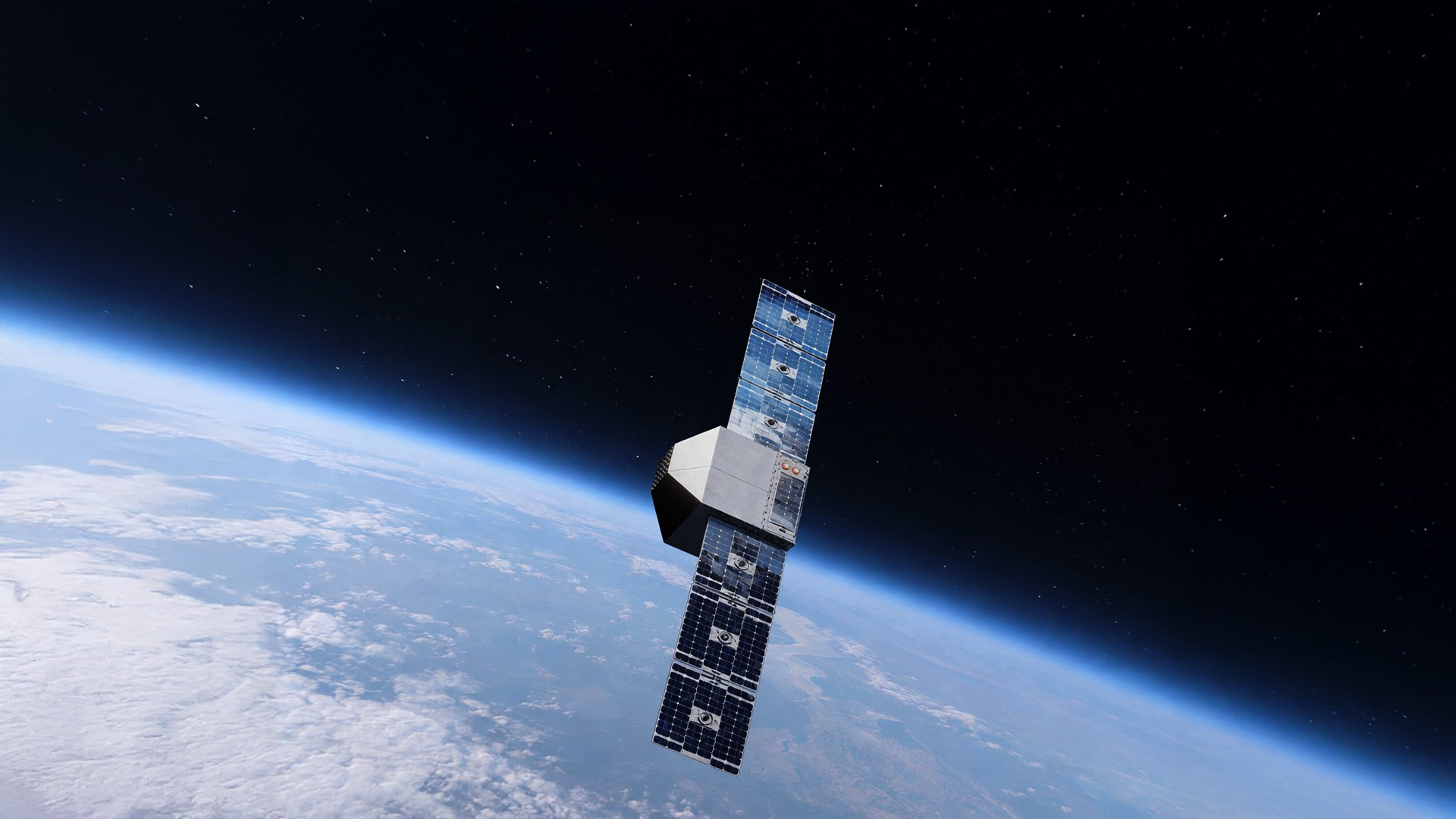
Mission set to pave the way for future long-duration operations in very low Earth orbit (VLEO)
Nigrán, Spain, and Vilnius, Lithuania, 4 August 2026 – Kreios Space, the VLEO satellite specialist, will be the first company in history to launch a satellite with an air-breathing electric propulsion (ABEP) into orbit. To test its technology, the company is using a microsatellite bus by Kongsberg NanoAvionics (NanoAvionics), a leading small satellite manufacturer and mission integrator.
Kreios Space’s ABEP aims to pave the way for future long-duration missions in VLEO. At altitudes of 300 to 150 km, the technology will allow satellites to deliver sharper images, higher-accuracy measurements, lower latency and better link budgets.
For its first in-orbit demonstration, Kreios Space has chosen NanoAvionics’ MP42 microsatellite bus, weighing approximately 200 kg in its final configuration, including a yet to be announced optical payload. From its very low Earth orbit, the mission will validate the performance of its ABEP thruster, take measurements of the environment, and capture sub-meter resolution images in the visible and near-infrared (VNIR) spectral range.
NanoAvionics will provide and customize its flight-proven microsatellite bus for this specific mission, integrate the optical payload, perform full system testing, and commission the platform in orbit to enable Kreios Space’s team to take over operational control.
Kreios Space will carry out this mission at a time when interest in and development of VLEO technologies has accelerated, as exemplified by China, which has recently established a national very low Earth orbit industry alliance, as well as several space companies worldwide that have announced missions and investment rounds in this domain.
Adrián Senar, CEO of Kreios Space, said: “Kreios is building the satellites that make sustained operations in Very Low Earth Orbit possible. By enabling satellites to fly lower, longer, and more efficiently, we are enabling higher-resolution Earth observation, much better satellite communications, more responsive and accurate missions, and a more sustainable orbital infrastructure. “Partnering with NanoAvionics in our first-in-orbit flight provides us with a satellite bus and market-leading experience necessary to allow us to test our new technology in confidence. It will mark a turning point in the role and value of VLEO.”
Atle Wøllo, CEO of Kongsberg NanoAvionics, said: "Kreios is tackling one of the most demanding operating environments in space, and this mission joins a very short list of European VLEO initiatives. This contract reflects our customers' continued confidence in the maturity of our platforms and our ability to tailor them for demanding new mission profiles. "Our engineering team has worked closely with Kreios to configure the MP42 satellite bus to the mission's specific requirements, and support the integration of Kreios' technology."
Get in Touch
We’re shaping the future of satellite propulsion and VLEO missions. Whether you’re an investor, partner, or industry collaborator, we’d love to hear from you. Reach out to explore opportunities to work with Kreios Space.
Thank you for submitting the form.